Olympic Election in Sri Lanka Marred by Allegations of Unequal Opportunities and Interference
 spicysport
3 min read
spicysport
3 min read
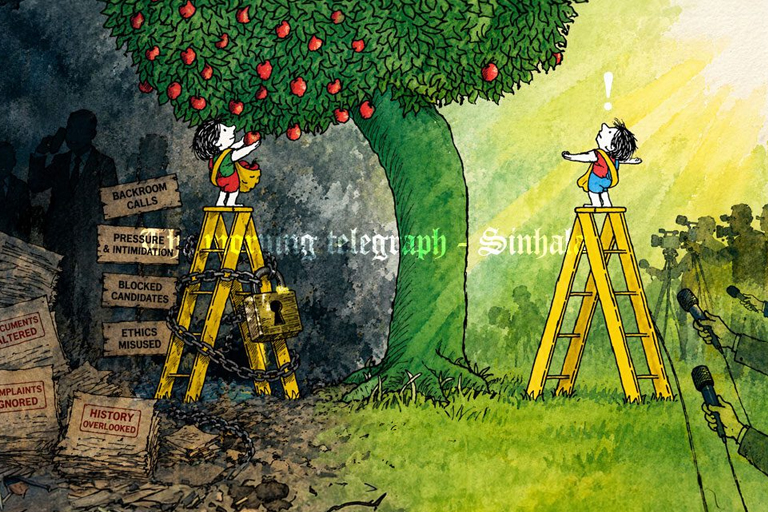
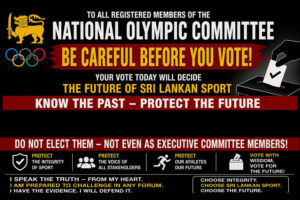
The upcoming election for the National Olympic Committee of Sri Lanka (NOCSL), scheduled for April 25, 2026, has been overshadowed by serious claims of bias, selective targeting of candidates, and attempts to sideline rivals through ethics probes and media pressure.
Incumbent President Suresh Subramaniam, along with figures such as Deva Henry and Asanga Seneviratne, stand accused of going to extreme lengths — including pressuring media outlets to dismiss journalists critical of their actions — to protect their positions and block stronger challengers.
According to internal sources, efforts by Subramaniam to deploy the NOCSL’s Ethics Committee to disqualify certain candidates have drawn the attention of the International Olympic Committee (IOC). The IOC has reportedly issued warnings regarding the committee’s operations and procedures. As a result, planned moves to prevent candidates like Jaswar Umar and Shirantha Peiris from contesting appear to have failed, with objections against some nominees reportedly rejected by the election committee.
Serious Allegations Against Asanga Seneviratne
Asanga Seneviratne, a former rugby administrator and one of the presidential contenders (nominated via the Baseball Association), faces a raft of accusations, some political and others directly related to sports governance.
During his tenure as President of Sri Lanka Rugby, the union was fined £50,000 (approximately Rs. 25–30 million at the time) by World Rugby for fielding Fijian players without proper eligibility documentation. Critics allege that false or misleading information and forged documents were submitted to facilitate their participation. The fine was later deducted from Sri Lanka’s rugby development funds allocated by the international body, a decision reportedly communicated through correspondence involving current National Sports Council Chairman Priyantha Ekanayake.
This episode allegedly eroded support for Seneviratne among provincial rugby unions, which suffered from the resulting funding shortfalls. Although he enjoyed strong political backing at the time, his removal from the rugby presidency affected his standing within the NOCSL.
Sources claim Seneviratne’s return to influence, including a vice-presidential role in baseball secured with Subramaniam’s assistance, was part of a strategy to maintain his position ahead of the election. There are also unverified reports of attempts to amend rugby constitutions with ministerial involvement to facilitate comebacks.
Additional complaints include alleged financial mismanagement in rugby, with claims of Rs. 35 million in unexplained debts and related matters reportedly forwarded to the Commission to Investigate Allegations of Bribery or Corruption. However, under the current administration’s approach to sports governance, such cases have reportedly seen little progress.
Questions Over Baseball Nomination and Governance Standards
Seneviratne’s nomination comes through the Sri Lanka Baseball Association, where he previously served as an executive. The association itself faces criticism for inactivity — no local tournaments were held last year — and allegations of deleted official emails potentially linked to past documentation issues.
Critics question the ethics of allowing officials from such low-profile or underperforming federations to contest top Olympic posts. Deva Henry, for instance, represents the Ice Skating Association, a sport with minimal presence in tropical Sri Lanka. Detractors argue that these nominations reflect a system where small federations are maintained primarily for voting power and international travel opportunities rather than genuine sports development.
Selective Application of Ethics Rules?
The article highlights what it describes as double standards. While the Ethics Committee has been active in scrutinising certain candidates, broader governance issues — including past scandals in rugby and questions over other federations — have reportedly not received equivalent attention.
Outgoing or aligned officials are accused of using the committee and media influence to create an uneven playing field, targeting rivals while shielding their own allies. This has fuelled perceptions that the election does not offer a level playing field for all aspirants.
With five candidates vying for the presidency — including Deva Henry, Asanga Seneviratne, Jaswar Umar, Shirantha Peiris, and Pritiviraj Perera — the contest has exposed deep divisions within Sri Lankan sports administration.
The IOC’s involvement and warnings underscore the international stakes. Observers warn that continued internal turmoil could damage Sri Lanka’s standing with global Olympic bodies.
As the April 25 election approaches at the Olympic House, questions remain over whether the process will uphold principles of fairness, transparency, and good governance — or further entrench allegations of manipulation.
Source – themorningtelegraph.com